Friday, April 12, 2013

El poema de los azulejos en la página del vocabulario de “la poesía.”


Es un poema por el poeta español Federcio García Lorca llamado Romance sonámbulo.
Este vínculo te tomará a una copia bilingüe del poema.

Thursday, January 17, 2013

Secrets of the Superfruit


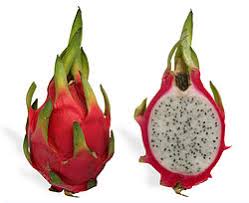
After the emergence of Quinoa in American markets, the food industry is turning its attention to Latin America once again.  However, this time these culinary entrepreneurs are in the market for a super fruit called the "pitaya."
Somewhere in a warehouse near downtown Philadelphia, Eric Helms is hoarding pitayas. "It is low in sugar," he explains of the Nicaragua-grown fruit, "and it's very of the moment." Or so he hopes: now that he's bought exclusive U.S. importing rights to the pitaya, he's blending it into upwards-of-$8 concoctions at his Juice Generation bars in New York City. In a few months, he says, it just might become America's next great superfruit.
He's not alone. After the success Pom Wonderful has had juicing high-antioxidant pomegranates, a new generation of entrepreneurs is aiming to parlay the health benefits of other fringe crops into million-dollar superfruit empires. In the past year alone, we've witnessed the emergence of the golden berry, the baobab fruit, the lingonberry and others.
But are they really as healthy as they seem? Like all fruits, superfruits tend to be high in fiber and antioxidants, which make them better snacks than most. But experts worry that the superfruit label--which comes from marketers, not the FDA--tricks people into thinking a single serving can confer all health benefits, "which is not true," says Jeffrey Blumberg, a nutrition professor at Tufts University. In the right mix, though, pitayas and their ilk can indeed be super. They just might have to mingle with the masses. "Apples and bananas are good too," says Blumberg.


Read more: http://www.time.com/time/magazine/article/0,9171,2133328,00.html#ixzz2IEx88yPy


Sifferlin, Alexandra. "Secrets of the Superfruit." Time. 21 Jan 2013: n. page. Web. 17 Jan. 2013. <http://www.time.com/time/subscriber/article/0,33009,2133328,00.html>.
   

Tuesday, October 23, 2012

La relajación de las leyes cubanas. ¿Una buena señal para relaciones con EEUU?


Starting early next year, the Cuban government will eliminate the requirement that citizens who are planning to travel to other nations obtain an exit visa, official permission to go abroad. A notice in Granma, the island nation's Communist Party newspaper, stated that once the policy takes effect on Jan. 13, Cuban citizens will also no longer have to present a letter of invitation to visit another country. They will have to show only their passport and visas for their destination countries. President Ral Castro pledged last year to get rid of the widely resented exit visas. The decision to do so is a sign that the party is answering calls for reform without surrendering much power. October marks the 50th anniversary of the 13-day Cuban missile crisis, during which tensions between the U.S. and the Soviet Union almost exploded into nuclear war.

Notice:  The Communist newspaper “Granma” is named after the boat in which Castro and his fighters landed in Cuba from Mexico to begin their invasion of Cuba.

"Cuba." Time Magazine. 29 2012: n. page. Web. 22 Oct. 2012.
           <http://www.time.com/time/subscriber/article/0,33009,2127186-3,00.html>.


Monday, October 1, 2012

Un problema mexicano.


'They left through the door.'
JORGE LUIS MORAN, public-security secretary of the Mexican state of Coahuila, on the escape of more than 100 prisoners. The men were thought to have dug a tunnel, but now guards are accused of helping the inmates in an escape orchestrated by Los Zetas cartel


Read more: http://www.time.com/time/magazine/article/0,9171,2125506,00.html#ixzz28341apqw


"Mexico." Time. 08 Oct 2012: 15. Print.

¡ESPAÑA EN GUERRA!

The autonomous region of Catalonia made a new push for independence when its president, Artur Mas, called for a referendum on Nov. 25 to start "a process of auto-determination." His announcement came two weeks after an estimated 1.5 million Catalans held a pro-independence march in Barcelona and days after the central government rejected Catalonia's request for a bailout of 5 billion euros. Spain's economic crisis has heightened separatist sentiment in the country's wealthiest yet most indebted region. Catalans believe that the taxes they have been paying to Madrid have been mismanaged and that the bailout they requested is money that should be returned to their region. Meanwhile, anti-austerity protests rocked the Spanish capital yet again, as demonstrators marched on the country's parliament building and confronted police, leading to at least 64 people being injured.

Read more: http://www.time.com/time/magazine/article/0,9171,2125506,00.html#ixzz2832s04tw


"Spain." Time. 08 Oct 2012: 14. Print.